Bakersfield keeps adding residents, but that growth is landing in a market that's close to balanced rather than overheated.
Key Takeaway
Bakersfield is one of California's largest cities with 422,853 residents as of January 1, 2026, and it continues to grow. That growth hasn't set off a bidding war: the median home price rose just 1.2% year over year in the latest 90 days. Buyers who want a single-family house have room to compare options, while a condo offers a cheaper but slower-selling alternative.
Who This Guide Is For
You're looking up the population of Bakersfield, CA while deciding whether its growth means you should move quickly on a home purchase or price a sale aggressively.
What Is the Population of Bakersfield, CA?
In the 90 days ending September 30, 2026, single-family homes made up 823 of Bakersfield's 887 residential sales, and housing supply sat at 3.2 months. The city's growth is meeting a balanced supply of mostly detached homes.
The official population of Bakersfield is 422,853 as of January 1, 2026, according to provisional estimates from the California Department of Finance. The U.S. Census Bureau measures on a different date and estimates 422,165 residents as of July 1, 2025. The Department of Finance ranks Bakersfield the 9th largest city in California, among the state's 10 most populated cities.
Both counts cover addresses inside city limits only. Homes with Bakersfield mailing addresses can sit in unincorporated Kern County and don't appear in the city's official total. Zip codes and area layout don't follow city limits, so check a property's jurisdiction on county planning maps. Jurisdiction determines which local services and agencies apply to the home. Checking exactly where Bakersfield is located can help clarify these boundaries.
Is Bakersfield Growing?
The city's population increased 0.4% from January 1, 2025 to January 1, 2026, adding nearly 1,500 residents. That continues a steady climb from the 403,455 people recorded in the April 2020 Census.
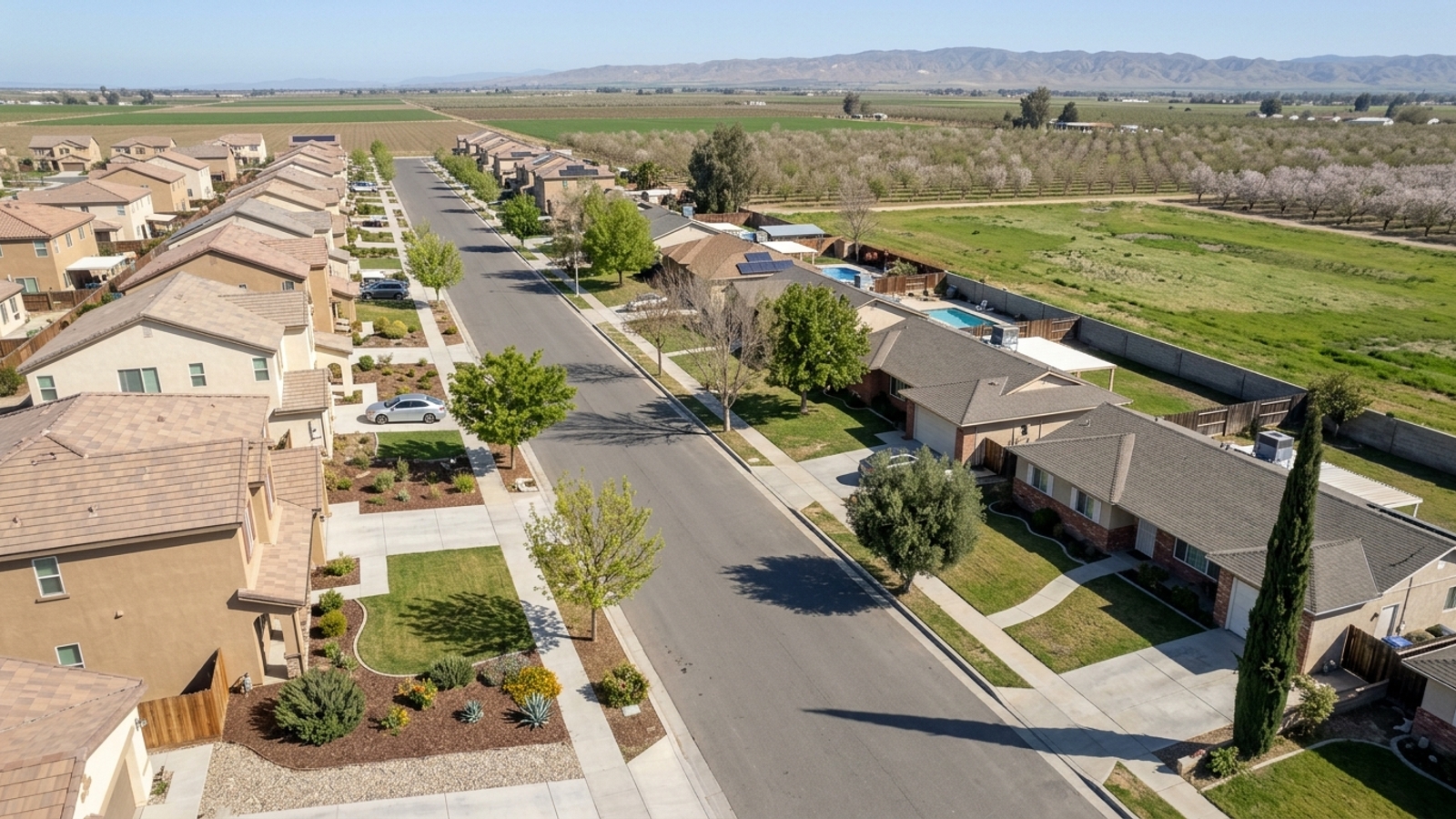
Much of that growth comes from annexing new land rather than urban infill. The city has pursued multiple "island" annexations, including a nearly 140-acre Cottonwood Road addition approved by the City Council. Because growth is spread across new subdivisions at the edges, buyers have new-construction options, while resale sellers compete directly with builders.
How Population Growth Affects Bakersfield Home Prices
The median time on market is 39 days and the average sale-to-list ratio is 99.1%. Homes sell close to asking price, and buyers have more than a month to decide.
Still, 26.4% of homes recently sold above list price. When buying a home, expect a well-priced house to draw competing offers, so you can't assume you'll lowball every listing. Move decisively on homes that are priced right. When selling a home, accurate pricing from day one matters more than counting on population growth to justify an aggressive list price.
Population Density and Housing Types in Bakersfield
Bakersfield covers roughly 149 square miles of land area, for a population density of 2,693.7 people per square mile. That's relatively low for a city of its size, and it shows in a housing stock dominated by detached homes.
Single-Family Homes
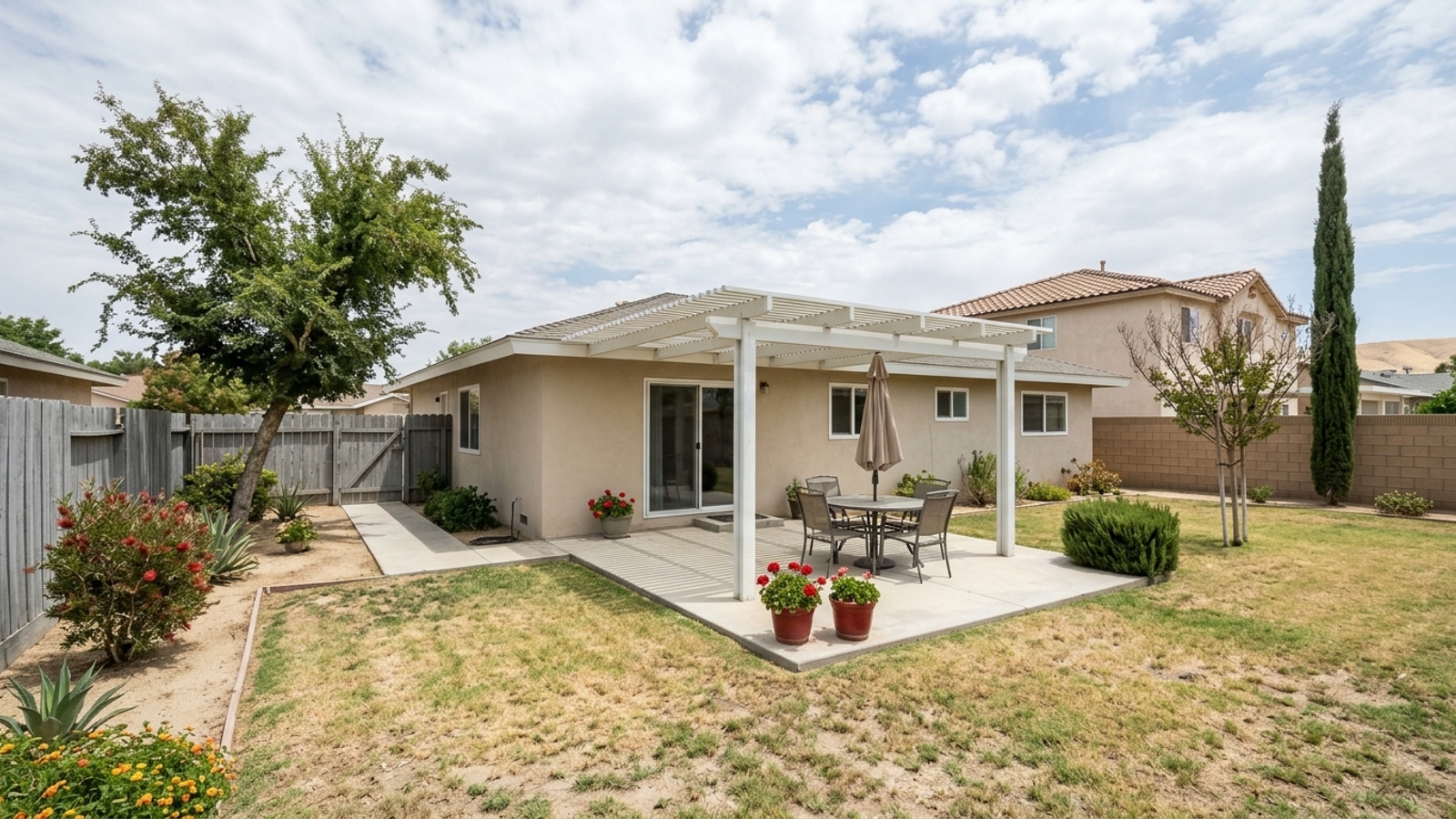
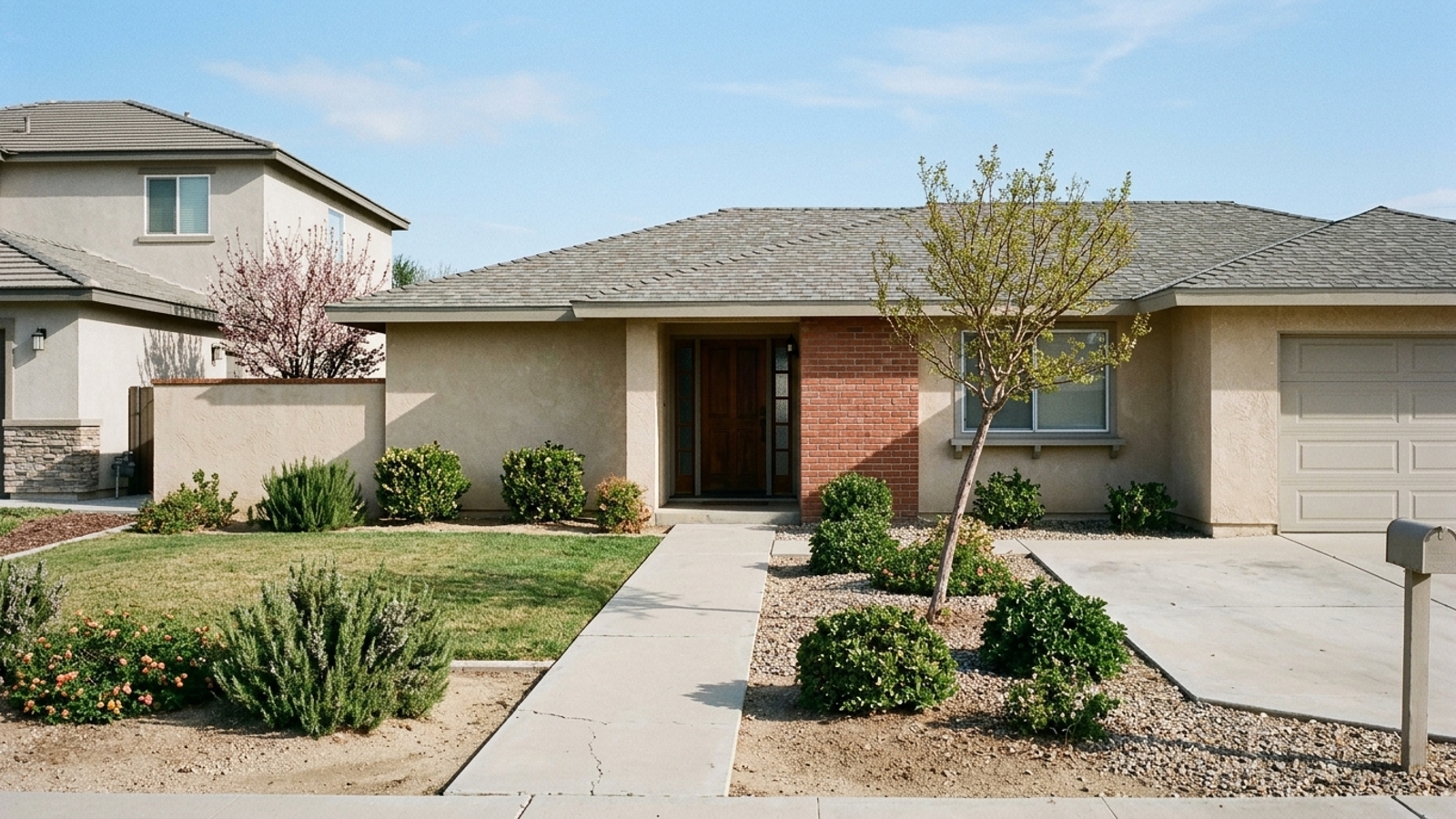
With that 9-in-10 share of sales, the single-family house is the default way the city houses its growing population. It gives buyers the widest selection of properties. In newer tracts, ask the seller or title company whether the home carries assessment-district or HOA fees.
Condos
A typical Bakersfield condo sold for about half the price of a typical single-family home in the latest 90 days, at a median of $211,978. That's a meaningful lower-cost entry point into a market that rarely builds new attached housing.
What you give up is speed and simplicity. Condos took a median 54 days to sell and slipped in price year over year, so reselling may take longer. HOA dues also add a monthly cost the median price doesn't show. Ask the association for current dues and check with your lender whether a specific complex is FHA-approved.
How to Use Bakersfield Population Data When You Buy or Sell
- Citable population figure: Quote the dated Department of Finance estimate above, and check the FAQ on why sources differ first.
- Worried about rushing or overbidding: The home-prices section shows sales near asking with time to decide.
- House or lower-cost condo: Compare the two housing-type sections.
- Selling and checking your price: The home-prices section shows whether current demand supports it.
For example, a buyer comparing the condo median to the single-family median sees a roughly $210,000 price gap. Weighing that saving against the extra two-plus weeks a condo can take to resell helps you decide which property type fits a five-year plan.
At a Glance
- All homes, median sale price: $419,800, up 1.2% year over year (90 days ending 2026-09-30)
- All homes, homes sold: 887, of which Single family 823 and Condo 36 (90 days ending 2026-09-30)
- All homes, median days on market: 39 (90 days ending 2026-09-30)
- All homes, sale-to-list ratio: 99.1%, with 26.4% sold above list (90 days ending 2026-09-30)
- All homes, months of supply: 3.2, with 927 homes in inventory (90 days ending 2026-09-30)
- All homes, median price per square foot: $234 (90 days ending 2026-09-30)
- Single family, median sale price: $422,821, up 0.7% year over year; $237 per square foot (90 days ending 2026-09-30)
- Condo, median sale price: $211,978, down 1.4% year over year; 54 median days on market; 4.2 months of supply; $192 per square foot (based on 36 condo sales, 90 days ending 2026-09-30)
Bakersfield Population FAQs
Is Bakersfield Considered a Big City?
Yes. Beyond its 9th-place rank in the state, it shares a similar population scale with cities like Oakland and Anaheim.
What County Is Bakersfield in, and What Is Its Population?
Bakersfield is the county seat of Kern County, and its metro area covers the entire county. Kern County had 927,328 residents as of January 1, 2026, up 0.1% from the previous year, according to the Department of Finance.
Why Do Sources List Different Populations for Bakersfield?
The Census Bureau and Department of Finance use different methods and dates. Some sites also quote the county or metro number instead of city limits, and ongoing annexations change the city's boundaries year to year.
Is Bakersfield Growing Faster than California?
Yes. The city's 0.4% gain came in a year when California's net domestic out-migration rose to 288,600 people, a key driver of the state's overall population change.
How Many Housing Units Are in Bakersfield?
About 139,391, per the Census Bureau's American Community Survey 2024 1-year estimate. The 927 homes in inventory are a very small fraction of that stock.
Is Bakersfield Safe?
It depends on the area. The Bakersfield Police Department reported that overall crimes citywide fell 7.5% from 2024 to 2025, with burglary down 13.7% and auto theft down 29.4%. Homicides rose 26.9% to 33, and reported theft increased 6.7%.
What Are the Best Neighborhoods in Bakersfield?
It depends on your budget, commute, and preferred home type. The figures on this page cover the city as a whole, but prices and amenities vary widely by zip code.
Is Bakersfield a Good Place to Live?
Yes, for buyers seeking affordability. The all-homes median of $419,800 compares with a statewide single-family median that has fluctuated around $900,000 to $930,000.
Sources